
Mitchell Sheriff Release Routing
The Mitchell County Sheriff’s Office is a law-enforcement, arrest, and transport agency. It is not a jail. That distinction controls every release inquiry. A person arrested in Mitchell may be booked or housed at McDowell County Detention Facility or at another prearranged jail. The Sheriff’s own file can identify the arresting officer, charge, bond, commitment, transport, and facility used. It may not contain the custodian’s final physical-exit time.
Begin with the full booked name, date of birth, approximate arrest date, and court file number when known. Ask which facility received the person on that date and whether Mitchell later transported the person again. Then contact the named custodian. Ask whether custody ended through bond, time served, a court order, or transfer. A transfer means one agency’s control ended while another began. It is not release to the community.
Confirm a Mitchell Sheriff Release
A reliable check joins records from agencies with different roles. Mitchell supplies the route. The housing jail supplies the incarceration and release entry. The court may supply the bond, judgment, dismissal, or release order that authorized the event. NC SAVAN/VINE can add a custody-event notice, but its wording must be read for “released” versus “transferred.” These sources can have different timestamps because an order, data entry, and physical exit are separate acts.
- Verify identity with at least two details, not a name alone.
- Ask the Mitchell Sheriff which jail held the person on the relevant date.
- Contact that jail and ask for the exact custody-end time, type, and destination.
- Check the Mitchell court case for the order or judgment behind the change.
- Use NCDAC only if state prison or state supervision became part of the path.
The full countywide search path is also laid out on the Mitchell County released inmates home page. It helps keep a Mitchell arrest, an out-of-county jail stay, and a later state sentence in the right systems.
Note: A VINE transfer alert marks departure from one custodian, not confirmed release to the community.
Mitchell Sheriff Release Records
Ask for existing records in clear, narrow terms. Useful Mitchell records may include the arrest report, commitment paperwork, transport log, housing facility, receiving agency, and any release-related order in the Sheriff’s possession. Request the housing jail’s separate inmate incarceration record from that jail. North Carolina law does not require either office to create a custom report or merge two agencies’ files.
| Record source | What it can establish |
|---|---|
| Mitchell Sheriff | Arrest, transport, housing route, and Mitchell-held orders |
| Actual jail | Admission, release or transfer time, authority, and destination |
| Mitchell court | Bond, disposition, judgment, commitment, or release order |
| NCDAC | State-prison sentence, discharge, or community supervision |
North Carolina’s public-record rule calls for inspection at reasonable times and copies as promptly as possible, but it sets no fixed universal response deadline. Ordinary uncertified copies generally cost no more than direct reproduction cost. An agency may assess a reasonable actual-cost special service charge for an unusually extensive request. No Mitchell Sheriff release-record or photo fee is posted in the research, so ask before ordering.
Mitchell Sheriff Records Contact
The official Mitchell County Sheriff department page is the correct source for current office details. It does not offer a jail roster, recent-release feed, or dedicated booking-photo page. Contact administration for arrest and transport records and for the name of the actual jail. The agency operates continuously, while the posted administrative schedule applies to office business.
Mitchell County Sheriff’s Office305 Baker Lane
Bakersville, NC 28705
Office: 828-688-3982
Alternate: 828-688-9974
Fax: 828-688-3949
Administrative hours: Monday–Friday, 8:00 a.m.–7:00 p.m.
Agency operation: 24/7
When writing, request the existing inmate incarceration or release-related record for one named person and a narrow date range. Include the booking or offender number if known. Ask the office to identify the actual custodian and any transfer destination shown. If a part is withheld, ask for the legal basis and for the public portions after lawful redaction.
Why Mitchell Has No Jail
The official 2020 commission minutes and the 2023 county assessment document the history and current no-jail condition.
Mitchell County’s no-jail condition is rooted in the fatal jail fire of May 3, 2002. County commission minutes from 2020 discussed a feasibility study and a possible 75-bed jail and law-enforcement center. That was planning, not proof of construction. The county’s 2023 opioid assessment still stated that Mitchell had no jail and that people from the county were often housed in McDowell.
This history matters to a release search because an old or unofficial page may imply that a conventional Mitchell County jail exists. It does not. A similarly named site about “Mitchell County Jail” may even concern Mitchell County, Kansas. Use the current North Carolina county page, identify the date-specific custodian, and keep the proposed facility distinct from an operating one. The lack of a local jail also explains why Mitchell has no local 24-hour or 72-hour release feed.
Note: The proposed 75-bed facility was discussed in 2020, but the 2023 county assessment still reported no operating Mitchell jail.
Mitchell Transfers Are Not Releases
A dated 2024 Sheriff report gives a concrete view of distributed custody. It counted 20 Mitchell inmates housed in McDowell County jail and prearranged detention facilities, along with six inmate transports. Those counts document the system’s geography. They do not identify a permanent list of custodians, show who left custody, or create a release roster.
The report also shows why a current app result can change without a community release. Mitchell may transport someone between local facilities, to NCDAC, or to another authority. The correct follow-up is specific: ask when the first custodian’s control ended, under what authority, and where the person went. Then verify with the receiving system. Do not collapse a transport date, court order date, and physical release time into one date.
The published Mitchell Sheriff report is also the source for the project image below. It is evidence of distributed housing and transport activity, not a list of released people.
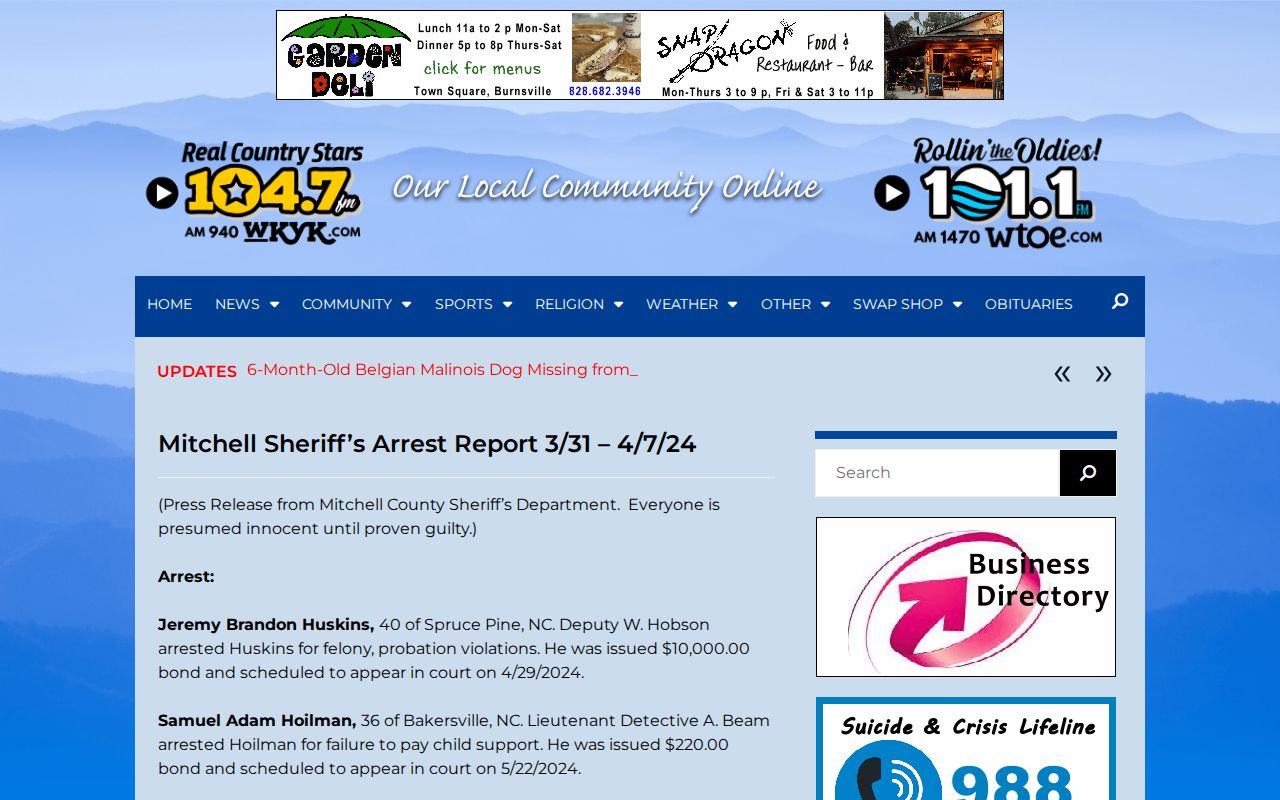
The captured report reinforces the need to identify the actual jail before requesting a release record.
Mitchell Release Versus Transfer
Several outcomes can remove a person from one agency’s current view. Bond may allow return to the community while the criminal case remains pending. Time served or a court-ordered release can end confinement. Probation places a person under court-ordered community supervision. A move to NCDAC starts or continues state custody. A handoff to ICE, the U.S. Marshals Service, or another county changes custodians.
- Release
- Custody ends and the person returns to the community, with or without supervision.
- Transfer
- One custodian hands the person to another jail, prison, or authority.
- Discharge
- A sentence or supervision obligation ends in the relevant corrections system.
- Detainer
- A request or basis for another authority to assume custody.
Use each term only when the record supports it. A Mitchell transport log can show movement. The receiving jail can show the next admission. The final custodian can confirm community release. That chain is more dependable than treating a blank search result as an answer.
Note: Only the final custodian can distinguish a community release from a handoff to another jail, prison, or authority.
Mitchell Orders and Release Execution
A Mitchell County court event and a jail release event answer related but separate questions. The eCourts Portal may show bond activity, a disposition, a judgment, a dismissal, or a sentence. The signed document can explain the legal authority. It usually does not establish the exact moment when an out-of-county jail completed its checks and ended physical custody. For the official court document, the Mitchell County Clerk of Superior Court is at 328 Longview Drive in Bakersville, with phone 828-688-5100 and weekday hours from 8:30 a.m. to 5:00 p.m.
When a court result suggests time served or release, ask the Clerk for the judgment, bond order, dismissal, or release order by file number. Then ask the actual jail when that order was executed. Another commitment, warrant, sentence, or detainer can keep a person in custody after one Mitchell matter ends. A detainer is a basis for another authority to assume custody. No source establishes a standard Mitchell processing time, so an order should not be turned into a promised exit hour.
A useful timeline preserves the order-entry time, any Mitchell transport time, the custodian’s release or transfer time, and the receiving agency’s admission time. Differences are not automatically errors. They may mark distinct steps. This is especially important when the Sheriff arranged housing but did not operate the cellblock where the order was carried out.
Note: A signed court order explains authority, while the housing jail’s entry supplies the physical custody-end time.
Mitchell Booking Photo Custody
The Mitchell Sheriff has no official booking-photo gallery. Ask whether the office created or holds an identification image, then ask which jail performed intake. The actual booking custodian may hold a different photograph in its incarceration file. A state-prison image, registry image, and news photograph come from other systems and should not be described as the same record.
North Carolina public-record law defines records broadly enough to include photographs, but access remains record-specific. Investigative, juvenile, expunged, sealed, medical, and security-sensitive material may be restricted. Request the existing image for the named custody episode and ask for the statutory basis if access is denied. Do not ask the Sheriff to create an image record or retrieve one from a jail it does not control.