
Mitchell County NC SAVAN Coverage
North Carolina calls its VINE network NC SAVAN. It is a free, confidential service linked to all North Carolina jails and to Adult Correction records for prison, probation, and parole. VINELink is the public person-search and registration route. It reports information supplied by the participating agency. That makes it useful for a custody event, but it is not the custodian’s full release ledger.
Mitchell County has no operating jail. A person arrested there may be booked in McDowell County Detention Facility or another prearranged jail. Search the facility that actually received the person. NC SAVAN does not cover someone held only at a police precinct, juvenile or mental-health facilities, or a person who bonds out at the magistrate level without being booked into a connected jail. It also does not replace federal custody tools.
Search Mitchell Inmates on VINELink
Start with enough identity detail to avoid a name collision. A full name alone may return several people or miss an alias. Use an agency or offender identifier when available. Before searching, ask the Mitchell County Sheriff which jail took custody on the relevant date. That step matters because McDowell holds many, but not all, Mitchell detainees.
- Open the official VINELink person search and select North Carolina.
- Enter the person’s name or available ID details. Use spelling variants only when the first exact search fails.
- Compare the facility, identifier, and available identity facts for each possible match.
- Open the matching record and read the current status and most recent event as written.
- Decide whether the event reports release, transfer, escape, return, or another custody change.
- Confirm a jail event with that jail, or a state event with NCDAC Offender Public Information.
If no record appears, do not conclude that the person was released. The person may have been held in a different jail, never booked into a connected facility, entered under another form of the name, or moved to a system outside VINE. The Mitchell County released inmate lookup covers the full custodian, court, state, and federal search ladder.
Note: A blank VINELink result does not prove release; confirm the actual Mitchell County housing jail before drawing a custody conclusion.
Mitchell VINELink Release Fields
VINELink displays the public details supplied for the selected record. Exact screens and fields can differ by jail or corrections system. Match the person and source before relying on a status word. A reported release means departure from the supplying agency’s custody. It does not by itself rule out a handoff to another authority.
| Field or event | How to read it |
|---|---|
| Name and identifier | Use both to distinguish the correct person and custody record. |
| Facility or agency | Shows which connected custodian supplied the event. |
| Custody status | Describes the state reported for that record, not all government systems. |
| Release event | Supports departure from that custodian and should be checked for destination. |
| Transfer event | Means custody moved and is not release to the community. |
| Event time | May reflect agency transmission and should be compared with the release summary. |
A scheduled or projected state date is not proof of actual release. Open the NCDAC individual record and read the sentence and status panels when state prison is involved. For county custody, ask the actual jail for the release date, time, authority, and destination. Court orders can explain why release was authorized, but the jail record confirms when physical custody ended.
Official Mitchell VINELink Search Screen
The official VINELink service provides the North Carolina person-search interface used for a specific custody record. The screen is the proper starting point after the actual jail or NCDAC identity is known.
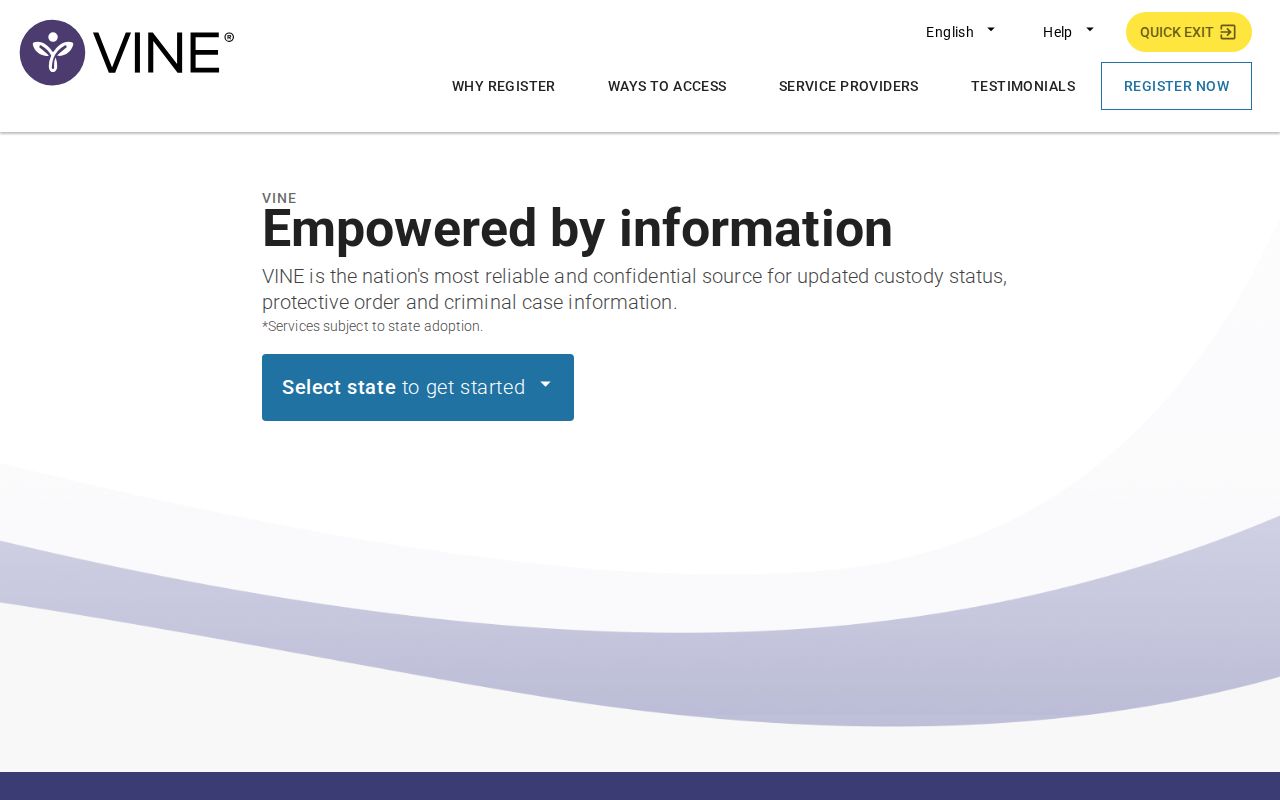
The search screen does not create a Mitchell County jail roster. Use the result’s facility and ID fields to connect the event to McDowell, another housing jail, or NCDAC. Save the access time when two sources appear to conflict.
Register Mitchell Release Notifications
Registration follows the person record, not merely a name. Select the verified match and add the delivery method that fits. Available options can include phone, text, email, TTY, or app delivery. Register each relevant jail or DAC identifier. If the person transfers and receives a different record at the next facility, register again against the receiving identifier.
- Open the correct VINELink result and choose the notification option.
- Select the custody events and available delivery channel.
- Enter the phone number, text number, email address, TTY, or app details requested.
- For telephone notice, create a four-digit PIN that can be recalled when the call arrives.
- Complete any confirmation step shown for the chosen channel.
- When a call arrives, listen to the event and enter the PIN to acknowledge it.
Registration is anonymous. The incarcerated person is not told who registered. A notification should prompt a direct check of the event and destination. NC SAVAN itself warns users not to rely on the service as the sole source for safety planning or custody confirmation.
Mitchell VINE Calls and PINs
Telephone alerts repeat until they are acknowledged or their delivery period ends. Ordinary calls repeat every two hours from 8:00 a.m. through 8:00 p.m. for 24 hours. Critical release, escape, and capture calls repeat every 30 minutes for 24 hours and may arrive at any hour. Email is sent once. These patterns describe notification delivery, not the amount of time required to release someone.
Enter the four-digit PIN after listening to the call. That acknowledgment stops repeat calls for that event. Forgotten PIN help and operator support are available through NC SAVAN at 1-877-627-2826, option 0. The service runs around the clock. NCDAC Victim Support can address state victim-service questions at 1-866-719-0108 during its listed weekday business hours.
Note: Keep the PIN private and verify the event with the reporting jail or NCDAC before acting on an automated message.
Mitchell NC SAVAN Guidance
The official NC SAVAN instructions explain registration, phone PINs, repeat calls, and service limits. Those instructions govern North Carolina notification use and help separate an automated alert from direct agency confirmation.
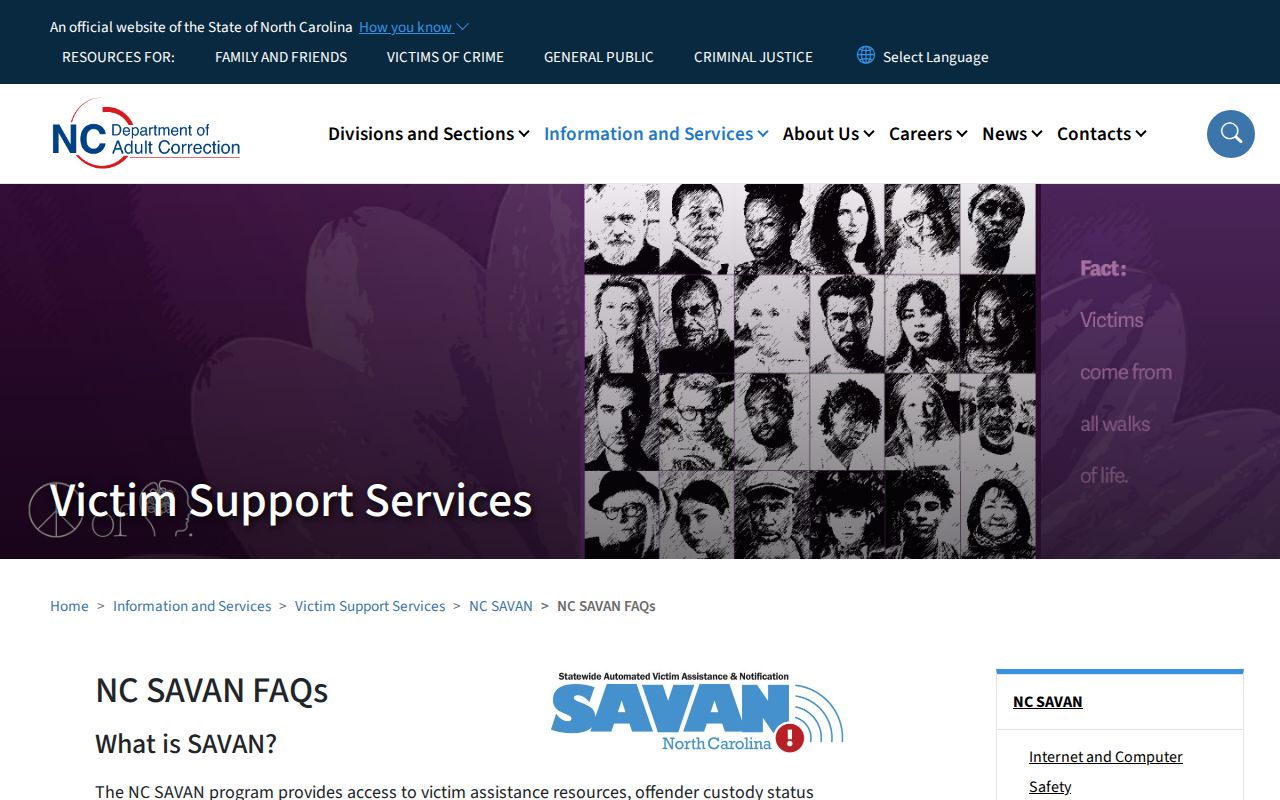
The state guidance reinforces two practical points. A user should register for each relevant identifier after a transfer, and notification cannot be the only source relied upon. In Mitchell County, those points matter because the arresting office and physical custodian are often different. Keep the Sheriff, the actual jail, and NCDAC roles distinct when following an alert.
NC SAVAN connects with North Carolina jails and Adult Correction prison, probation, and parole records. It excludes precinct-only custody, juvenile and mental-health facilities, and a person who posts a magistrate bond without being booked into a jail. Those boundaries make a blank search inconclusive. The Mitchell Sheriff can help determine whether a jail booking and connected identifier ever existed.
Mitchell Transfers Need New Alerts
Distributed custody creates a local notification issue. A Mitchell arrest can lead to a McDowell jail record, a record at another contract jail, and later an NCDAC offender record. Each agency may use a different identifier. A transfer notice from the first jail means the first custody episode ended, not that the person entered the community. Search the receiving system and register again if notice is still needed.
When VINE says released but another roster still shows the person, compare facility, identifier, and event time. The VINE event may belong to the sending jail while the roster belongs to the receiver. Ask both agencies whether the change was a community release or a transfer. The strongest confirmation combines the custodian’s release summary and destination with the court order or sentence authority.
- Release
- Departure from the reporting custodian, which may or may not lead directly to the community.
- Transfer
- Movement from one custodian to another, with confinement continuing.
- Custodian
- The jail, prison, or agency that physically controls the person at that stage.
- Identifier
- The jail or DAC number tied to a particular agency record.
Note: Register each jail and NCDAC identifier separately because a transfer can end one record while custody continues under another.
Mitchell VINELink Limits
VINELink does not cover every custody layer. Federal Bureau of Prisons records require the BOP Inmate Locator, federal pretrial custody may require the court docket or USMS records, and ICE has a separate locator with a limited recent-release window. VINE data can also lag the underlying agency. A person who bonded out before jail booking can be outside NC SAVAN’s coverage, while juvenile, mental-health, and precinct-only custody are excluded. For a Mitchell jail question, identify the actual custodian and request its release record.
A court docket answers a different question. It may show the bond, release order, dismissal, judgment, or probation event that authorized a change, but it usually does not give the jail’s precise exit time. The actual custodian supplies that fact. If a court event is recent and VINE has not changed, call the jail rather than guessing. Administrative processing, another commitment, and a transfer can all explain the gap.
For state custody, use NCDAC Offender Public Information. A physically released person may remain active as a probationer or parolee, while an inactive label still needs the underlying dates read. For county custody, the actual jail is the final source for physical exit. For a legal explanation, compare the release event with the Mitchell County court case.
The North Carolina Sex Offender and Public Protection Registry is also separate from VINELink’s general custody role. It applies only within its offense-specific scope and cannot serve as a Mitchell County release list. Keep a brief verification log when timing matters: note the facility, record ID, status language, event time, and access time, then add jail or NCDAC confirmation. This prevents a registry entry, old identifier, projected date, and new agency event from becoming one unsupported release claim.